

Natoli explains how using tapered dies increases tablet quality and decreases tooling wear for manufacturers.
Narrow escape
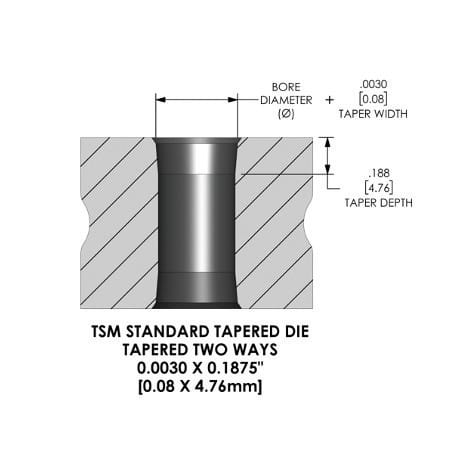
Utilising tapered dies is beneficial for both increasing tablet quality and decreasing tooling wear. Standard dies have straight bores throughout their entire height. Taper is an optional feature that increases the bore dimension at the top of the die, then tapers inward until reaching the nominal bore size. Tapered die bores offer a multitude of benefits, which include reducing tablet defects, such as capping and lamination.
Capping & Lamination
Capping occurs when the upper or lower cup portion of a tablet separates horizontally from the main body of the tablet. It can partially or completely separate to form a “cap.” Lamination is the separation of a tablet horizontally into two or more layers. One of the most common causes of capping and lamination is the compression of low-density formulations.